Start Reading — On Us:
As we complete our tenth year, we’re sharing 11 hand-picked articles from past issues — completely free.
These pieces showcase the clarity, credibility, and courtroom relevance that make Counterpoint essential reading for legal professionals who deal with science, forensics, and investigative issues.
Explore the articles. See the value.
Volume 9 is almost complete — with new content coming in 2026.
Ketogenic Diets and Breath Testing: Fact, Fiction, or Forensic Risk?
|
Subscribe to unlock this evidence-focused breakdown—and strengthen your ability to challenge unreliable breath test results in court.
|
Can a low-carb lifestyle trigger a false-positive on a roadside screening device? This article investigates how ketogenic conditions interact with electrochemical fuel cells, and whether they can produce interferents capable of corrupting breath alcohol readings.
You’ll gain a clearer understanding of:
|
70 Years of the Breathalyzer: From Innovation to Institution
|
Subscribe today to access this timely retrospective—and gain a deeper understanding of where forensic breath testing began, and where it’s headed.
|
On May 10, 2024, we mark seven decades since Robert Borkenstein introduced the original Breathalyzer—a groundbreaking leap in roadside alcohol testing. This article traces the device’s forensic evolution, from its 1954 patent to its enduring impact on law enforcement and legal proceedings.
Discover:
|
SFSTs Under the Microscope:
Accuracy, Assumptions, and the Case for Caution
|
Subscribe to access the full breakdown—and rethink what you thought you knew about SFST reliability.
|
Standardized Field Sobriety Tests (SFSTs) are routinely portrayed as reliable indicators of driver impairment. But the science tells a different story.
This article critically examines the original research behind SFSTs, exposing the gap between what these tests claim to measure—and what they were actually validated to do. With high false positive rates and no proven link to actual driving impairment, the implications for court are significant
You'll learn:
Essential reading for defense lawyers, officers, and anyone who wants the truth behind the roadside tests.
|
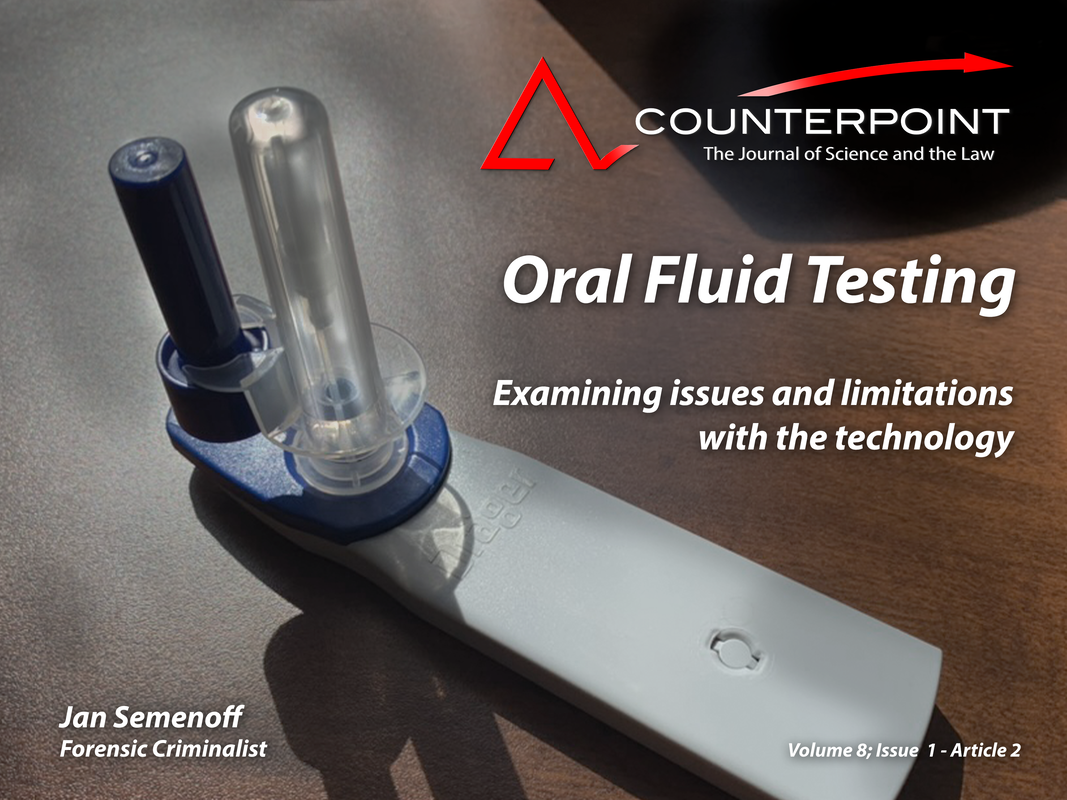
Oral Fluid Testing: The New Frontier in Drug Screening
|
Subscribe now —and stay ahead of the curve as oral fluid testing enters the courtroom.
|
As law enforcement expands beyond alcohol detection, Oral Fluid Testing (OFT) has emerged as the next-generation tool for roadside drug screening. Like breath tests for alcohol, OFT aims to quickly identify recent use of recreational drugs, controlled substances, and illicit compounds—but through saliva-based analysis.
This article explores:
Whether you’re a defense lawyer, prosecutor, or forensic consultant, this is a must-read breakdown of the technology that’s reshaping drug-impaired driving enforcement.
|
|
|
Behind the Headlines:
A Counterpoint Exclusive Interview with The New York Times
|
Subscribe today for access to this rare behind-the-scenes look at one of the most important public revelations in forensic science journalism.
|
In 2019, The New York Times broke a major investigative story exposing serious flaws in forensic breath alcohol testing across the U.S. - a piece that sparked national debate. I was interviewed as a subject-matter expert during the course of their reporting.
In this Counterpoint exclusive, I sat down with lead reporter Stacy Cowley to discuss what the investigation uncovered, how the story came together, and what it means for the future of forensic reliability in impaired driving cases.
You won’t find this full-length audio interview anywhere else.
|
National Voices. Critical Questions.
|
Subscribe to Counterpoint for deeper insights, expert commentary, and the articles that drive conversations like this.
|
In a wide-reaching panel discussion on NPR’s “1A”, I joined New York Times reporter Jessica Silver-Greenberg and prominent Massachusetts attorney Joseph Bernard to explore the troubling realities of forensic breath testing in DUI cases.
Hosted by Joshua Johnson, the conversation reached a national audience—and pulled no punches.
We tackled:
If you care about truth in science and integrity in the justice system, this discussion is essential listening.
🎧 Listen now on NPR’s 1A
|
🔒 Subscribe for full access to the current volume and ongoing expert analysis
Sample Articles & Case Studies – Free PDF Downloads
Get a curated selection of Counterpoint articles - now available in downloadable PDFs.
Whether you're new to Counterpoint or exploring how forensic science intersects with real legal practice, these sample packs offer a meaningful introduction.
The tests used in the Drug Recognition Expert (DRE), or Drug Influence Evaluation (DIE) testing are based on the initial work by Tharp, Burns and Moskowitz first published in 1981. The raw data from that study have never been published. However, several studies have investigated the various parameters used in DRE testing and the results of these studies raise considerable doubt on the validity of this form of evidence.
Most recently, Marcotte et al. published a randomized trial describing that the roadside tests for THC (Cannabis) are neither specific nor sensitive enough to be used for roadside testing for impaired driving when compared to placebo. This paper provides the background as to why this was predictable based on prior studies and the pharmacology of THC compared to alcohol.
This article was originally published in Counterpoint in three parts:
Part 1 - An Introduction to the DRE Testing Procedures
Part 2 - Psychopharmacology of Cannabis versus Alcohol
Part 3 - SFSTs in Marijuana Research in Comparison to Alcohol
Part 1 - An Introduction to the DRE Testing Procedures
Part 2 - Psychopharmacology of Cannabis versus Alcohol
Part 3 - SFSTs in Marijuana Research in Comparison to Alcohol
This collection includes real-world case studies on Soberlink and SCRAM devices, along with other expert-written pieces that demonstrate the clarity, credibility, and courtroom relevance our readers rely on.
Prepared for presentation at the International Association of Forensic Sciences, this detailed paper offers a critical, independent analysis of the Intoxilyzer 9000—a breath testing device used in jurisdictions across North America.
This review explores:
- The scientific principles behind the device
- Limitations in its design and implementation
- Legal and forensic concerns affecting reliability in courtroom use
Create your annual subscription today - $119 USD per volume
🔍 Subscribe for deeper analysis, expert articles, and courtroom-ready insight
The Counterpoint Forensic Encyclopedia
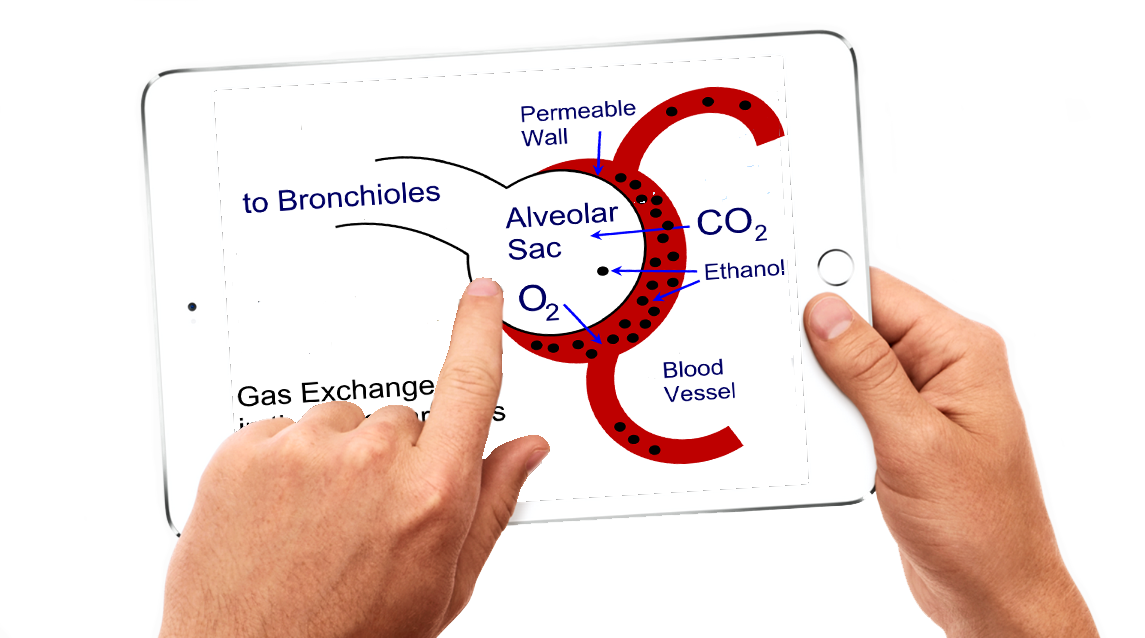
A free sample entry to the online Forensic Encyclopedia:
|
Your go-to reference for the science behind the evidence.
The Forensic Encyclopedia is an evolving, expert-driven resource designed to give legal professionals clear, concise explanations of complex scientific terms, testing methods, and investigative tools. Whether you’re preparing for trial, cross-examining an expert, or building foundational knowledge, this encyclopedia turns technical jargon into practical courtroom insight.
|
Updated regularly and included with every subscription, it’s more than a glossary — it’s a strategic advantage.
Check out this free preview entry.